
This page demonstrates the directionality used when defining a flexible and post B-DNA regions for performing molecular Monte Carlo simulations uisng the double stranded deoxyribonucleic acid moves. The general notation for defining flexible and post regions follows the notation used in VMD (excluding shortcuts and generic options such as 'backbone', 'sidechain', 'nucleic', 'water', 'protein', etc). Every flexible B-DNA region should include the paired bases from 2 DNA segments. It is critically important to enter the correct residues for the DNA base pairing; misaligned input will produce nonsense results. As a general rule, do not include the first or last residue of a segment in a flexible region.
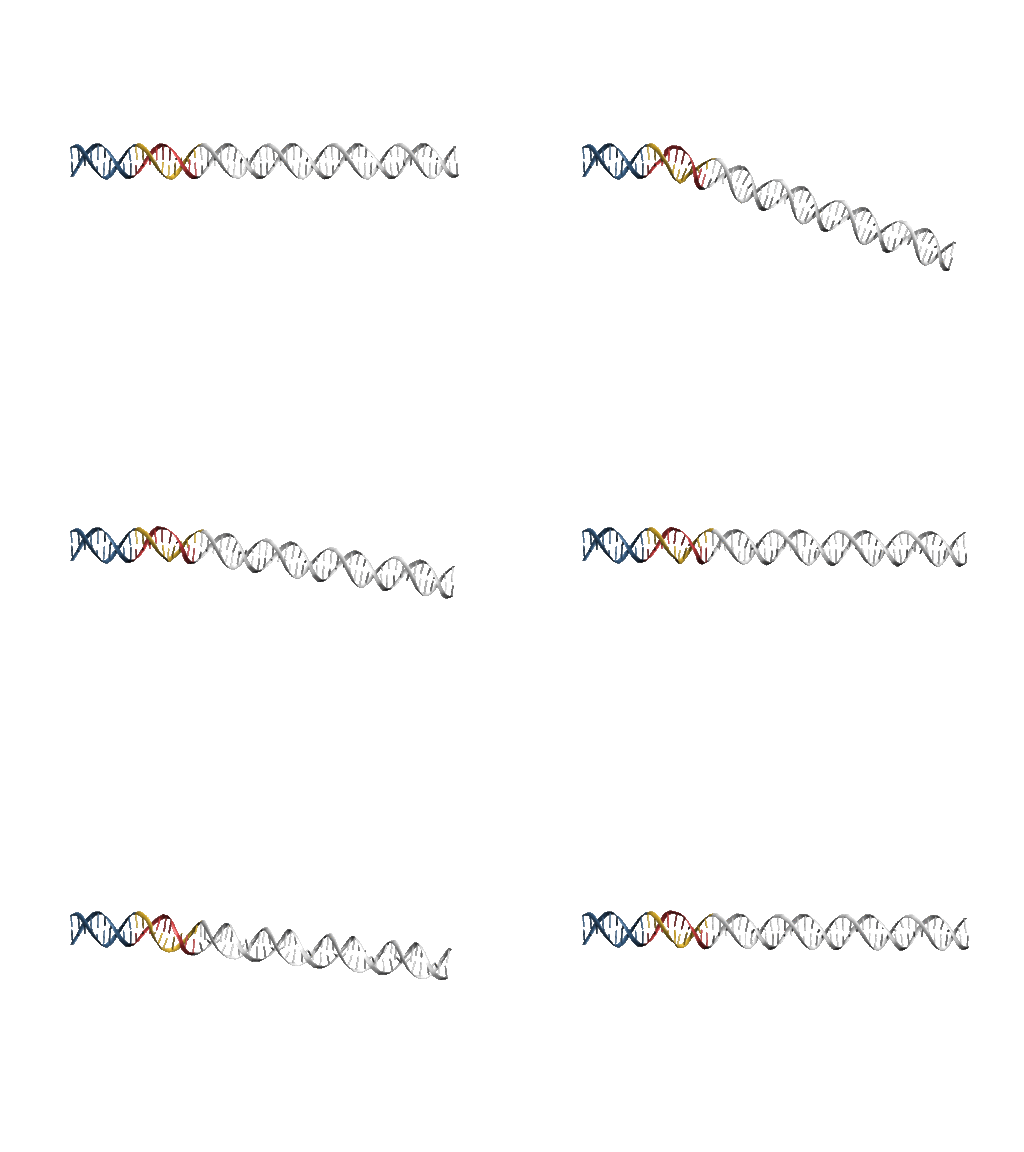
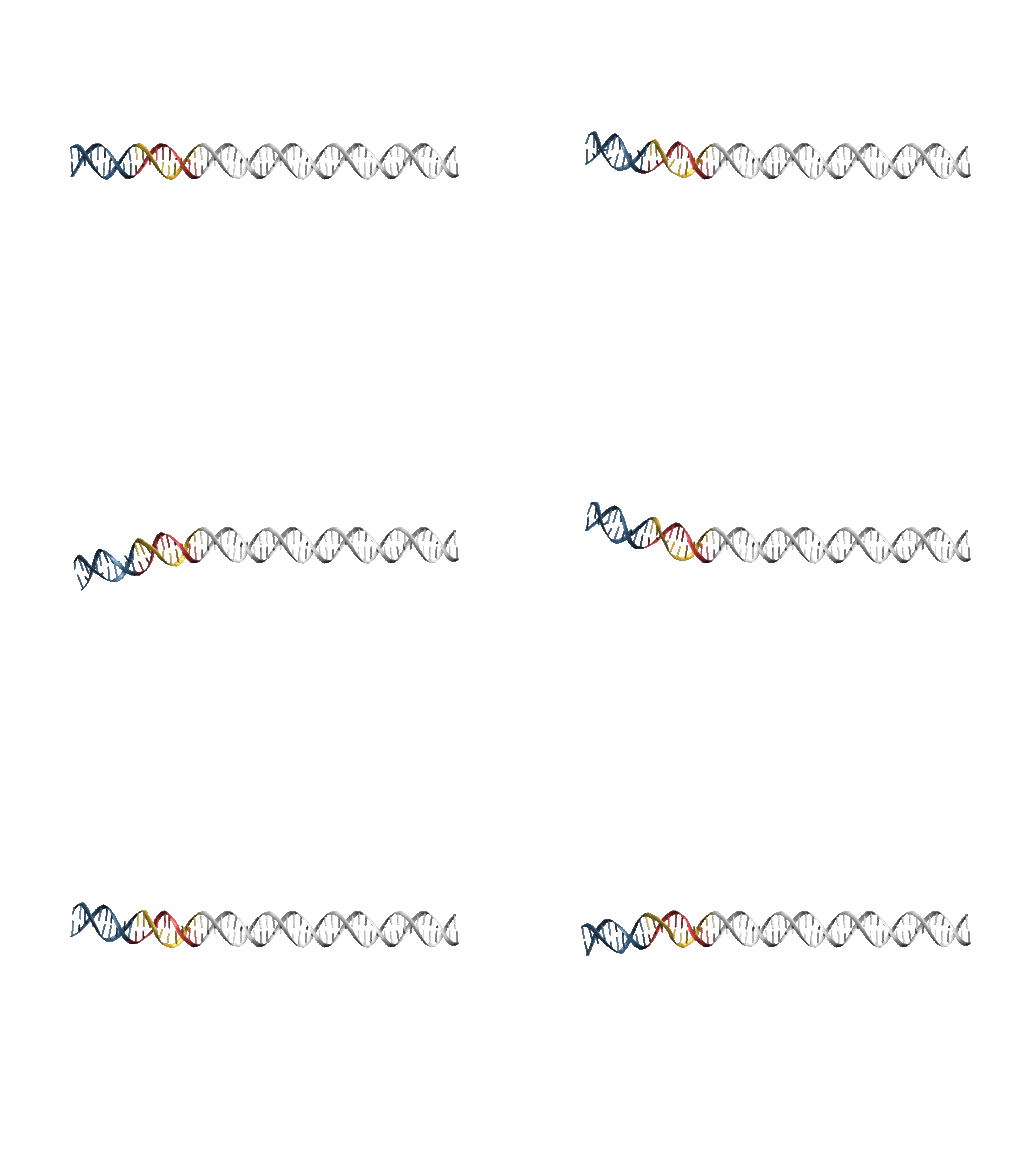
The above cartoon of the starting structure highlights the flexible region in yellow and red. This same flexible region can be defined two different ways depending on which DNA segment is listed first. Defining a flexible B-DNA region is based on the 5' to 3' direction of the first DNA segname in the flexible region definition. Notice the drastic difference between the definition of the post regions.
DNA1 first (white post region):
flexible region:
(segname DNA1 and resid >= 11 and resid <= 20) or (segname DNA2 and resid >= 101 and resid <= 110)
post region:
(segname DNA1 and resid > 20) or (segname DNA2 and resid < 101)
DNA2 first (blue post region):
flexible region:
(segname DNA2 and resid >= 101 and resid <= 110) or (segname DNA1 and resid >= 11 and resid <= 20)
post region:
(segname DNA2 and resid > 110) or (segname DNA1 and resid < 11)
| DNA1 first | DNA2 first |
|---|---|
 |
 |
| c36_dsDNA60_one.dcd | c36_dsDNA60_one_dna2_first.dcd |
input files
output files
| Protein Backbone | B-DNA | Single Stranded Nucleic Acid Backbone | Isopeptide Bond | |
|---|---|---|---|---|
| HIV-1 Gag Matrix Protein | X | |||
| Full HIV-1 Gag Protein | X | |||
| Diubiquiton | X | |||
| rpoS mRNA | X | |||
| Linear strand of B-DNA | X | |||
| Nucleosome Core Particle | X | X | ||
| Tetranucleosome | X | X |